

Much like the vehicle market, aerospace has its sights set on going electric– however flying with battery-powered engines is a harder proposition than rolling. Wright is amongst the startups seeking to alter the math and make energized flight possible at scales beyond small airplane– and its 2-megawatt engine could power the very first generation of massive electrical guest planes.
Electric vehicles have actually proven to be a huge success, but they have an advantage over planes because they do not require to produce enough lift to keep their own mass in the air. Electric aircrafts have actually been held back by this basic problem, that the weight of the batteries required to fly any distance with guests aboard indicates the airplane is too heavy to fly in the first place.
In order to leave this conundrum, the main thing to improve is efficiency: just how much thrust can be produced per watt of power. Given that reducing the mass of batteries is a long, sluggish process, it’s better to innovate in other methods: products, airframe and obviously the engine, which in standard jets is a huge, exceptionally heavy and complex internal combustion one.
Electric engines are generally lighter, simpler and more trusted than fuel-powered ones, however in order to attain flight you need to reach a certain level of efficiency. If a jet burned a thousand gallons of fuel per 2nd, the plane couldn’t hold the quantity required to take off. It falls to business like Wright and H3x to build electric engines that can produce more thrust from the same quantity of kept energy.
While H3x is focused on little airplane that will probably be flying quicker, Wright creator Jeff Engler explained that if you want to take on aerospace’s carbon footprint, you actually need to start looking at commercial passenger jets– and Wright is planning to make one. In spite of the business’s name, they do not need to construct it entirely from scratch. “We’re not transforming the concept of the wing, or the fuselage, or anything like that. What modifications is what propels the airplane forward,”said Engler. He likened it to electric automobiles in that much of the vehicle doesn’t change when you go electric, generally the parts that have actually operated the same method in concept for a century. All the very same, incorporating a new propulsion system into an airplane isn’t insignificant.
Wright’s engine is a 2-megawatt motor that produces the equivalent of 2,700 horse power, at a performance of around 10 kilowatts per kilogram. “It’s the most effective motor developed for the electric aerospace industry by an element of 2, and it’s substantially lighter than anything out there,” said Engler.
The lightness originates from a ground-up redesign utilizing a long-term magnet method with “an aggressive thermal strategy,” he described. A greater voltage than is typically utilized for aerospace purposes and an insulation system to match allow an engine that strikes the power and performance levels needed to put a large airplane in flight.
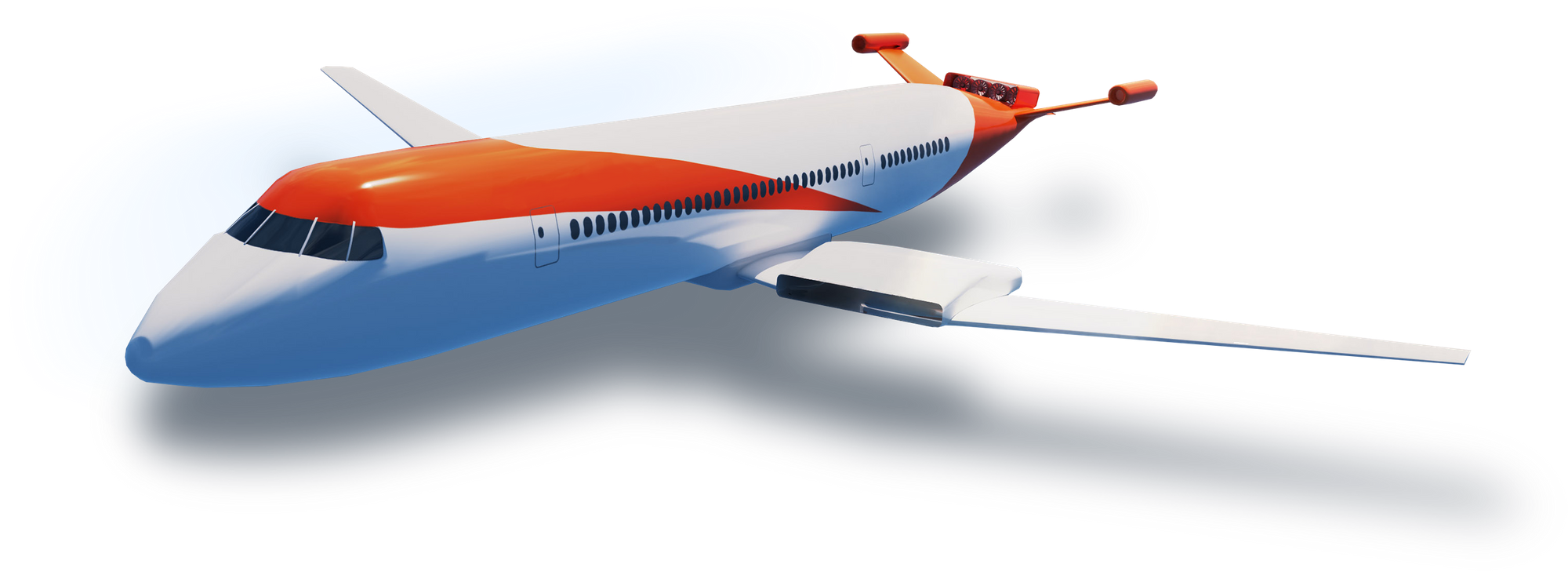
Image Credits: Wright is making sure its engines can be utilized by retrofitted airplane, but it’s also dealing with a plane of its own with recognized airframe makers. This first craft would be a hybrid electrical, combining the lightweight, effective propulsion stack with the series of a liquid fuel engine. Depending on hydrogen makes complex things however it makes for a much faster transition to electrical flight and a substantial reduction in emissions and fuel use.
Several of Wright’s motors would be attached to each wing of the proposed airplane, offering a minimum of 2 benefits. Redundancy. Aircrafts with two substantial engines are developed to be efficient in flying even if one stops working. If you have six or 8 engines, one stopping working isn’t almost so devastating, and as an effect the aircraft doesn’t require to carry twice as much engine as you need. Second is the stability and sound decrease that comes from having multiple engines that can be changed separately or in concert to reduce vibration and counteract turbulence.
Today the motor remains in laboratory testing at sea level, and as soon as it passes those tests (a long time next year is the strategy) it will be run in an altitude simulation chamber and then up at 40,000 feet for real. This is a long-lasting task, but a whole industry does not alter over night.
Engler was emphatic about the interest and support the company has actually received from the similarity NASA and the military, both of which have actually offered considerable money, product and know-how. When I raised the idea that the business’s engine may wind up in a brand-new battle drone, he said he was sensitive to that possibility, however that what he’s seen (and is going for) is a lot more in line with the defense department’s limitless freight and personnel flights. The armed force is a huge polluter, it ends up, and they wish to change that– and minimize how much money they invest in fuel every year as well.
“Think of how things changed when we went from propellers to jets,” stated Engler. “It redefined how an aircraft operates. This brand-new propulsion tech enables reshaping the entire market.”
Article curated by RJ Shara from Source. RJ Shara is a Bay Area Radio Host (Radio Jockey) who talks about the startup ecosystem – entrepreneurs, investments, policies and more on her show The Silicon Dreams. The show streams on Radio Zindagi 1170AM on Mondays from 3.30 PM to 4 PM.
Recent Comments